A genetics-first look at which animals have a true chromosomal parallel—and what’s actually going on in the viral photos.
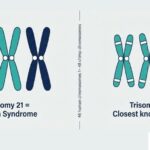
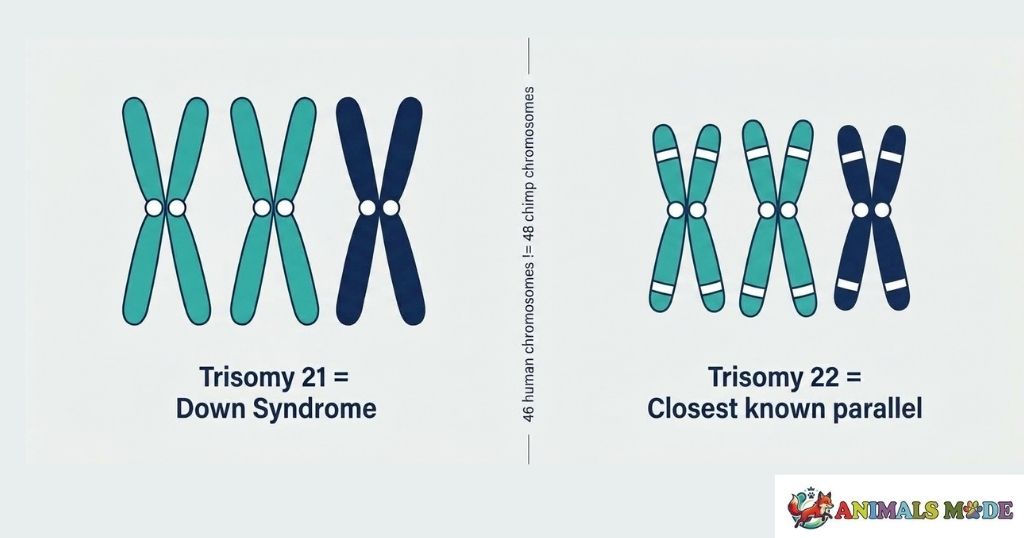
Down syndrome is a specifically human condition caused by an extra copy of chromosome 21 (trisomy 21). No other animal can have it, because no other species has a chromosome 21 in the same sense. That said, chimpanzees have a genuine structural equivalent—trisomy 22—and two cases have been scientifically confirmed. Most animals labelled “Down syndrome” online have something else entirely: a real but different condition that looks similar from the outside.
Our inclusion rule
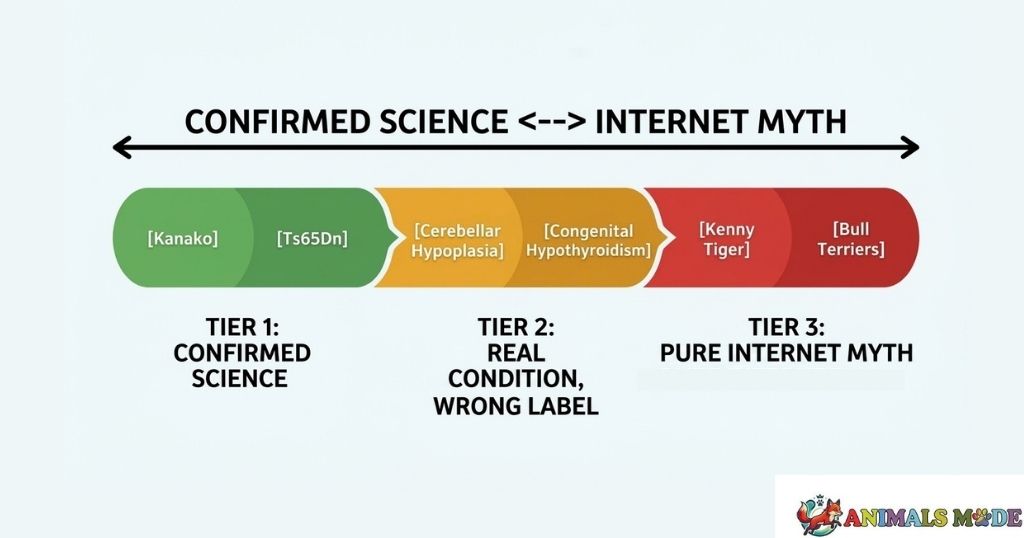
An animal makes this list only if a verified veterinarian or peer-reviewed source has (a) confirmed a specific chromosomal or genetic condition, (b) shown it produces features or developmental delays genuinely comparable to human trisomy 21, and (c) named the actual diagnosis—not “Down syndrome.”
The Chromosome Gap at a Glance
The reason animals can’t have Down syndrome comes down to chromosome count. Each species has a different number of chromosomes, so there is no shared “chromosome 21” to duplicate across species.
| Species | Chr. Pairs (Total) | Nearest to Human Chr. 21 | Can Have True DS? | Real Biological Parallel |
|---|---|---|---|---|
| Human (Homo sapiens) | 23 (46) | Chromosome 21 | Yes — Trisomy 21 | — |
| Chimpanzee (Pan troglodytes) | 24 (48) | Chromosome 22 | No | Trisomy 22 (homologous analogue) |
| Lab Mouse (Mus musculus) | 20 (40) | Chromosome 16 segment | No | Ts65Dn model (engineered segmental trisomy) |
| Domestic Cat (Felis catus) | 19 (38) | None | No | Cerebellar hypoplasia; XXY Klinefelter-like |
| Domestic Dog (Canis lupus familiaris) | 39 (78) | None | No | Congenital hypothyroidism; pituitary dwarfism |
| Horse (Equus caballus) | 32 (64) | None | No | Equine Turner syndrome (63, XO) |
| Tiger (Panthera tigris) | 19 (38) | None | No | Inbreeding depression (e.g., Kenny the White Tiger) |
Real Equivalents: A True Chromosomal Analogue
Two species have scientifically documented chromosomal conditions that are genuinely comparable to human Down syndrome—not just similar in appearance, but homologous at the genetic level.
Chimpanzee — Trisomy 22
Confirmed cases: 2 · Peer-reviewed · Closest known parallel to human DS
Human chromosome 21 is structurally homologous to chromosome 22 in great apes. This means an extra copy of chimp chromosome 22 is, genetically speaking, the nearest thing to human Down syndrome that exists in another species. [Hirata et al., 2017 — Kyoto University]
The normal chromosome count for all great apes is 48 (vs. 46 in humans). Only two confirmed cases of chimpanzee trisomy 22 have ever been published.
The First Case (1969)
The first confirmed case was reported by McClure and colleagues in Science in 1969. That chimpanzee died before its second birthday.
Kanako (1992–2020)
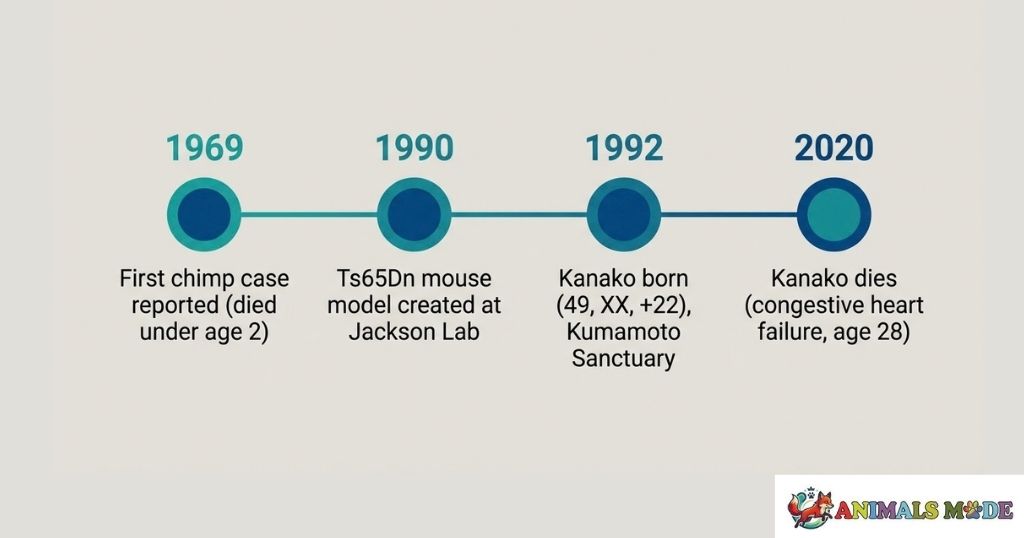
The second confirmed case is Kanako, a female chimpanzee born on 2 June 1992 at Kumamoto Sanctuary, Kyoto University, Japan. Her karyotype was confirmed as 49, XX, +22—meaning she had an extra 22nd chromosome. She died on 20 February 2020 from congestive heart failure. [National Institute of Genetics Japan]
Her parents were both wild-born and healthy. Her father, who was roughly 15 at the time of Kanako’s conception, had seven other offspring—all apparently normal. This rules out any simple hereditary explanation.
Confirmed symptoms (all matching human DS parallels)
- Retarded growth — below-average weight after age five
- Infantile cataracts beginning at 305 days; declared bilaterally blind at age 7
- Nystagmus, strabismus, and keratoconus (eye conditions)
- Congenital atrial septal defect (confirmed by echocardiogram at age 22)
- Hypodontia — only one premolar per side; no third molars
- Neonatal hypotonia — limp limbs and reduced vocalisation at birth (chimpanzees are naturally among the most expressive animals vocally, which made this symptom especially notable to researchers)
Because Kanako was blind, she could not safely read aggressive body language from other chimps and had to be housed separately.
A wild-born female named Roman was introduced as a companion in 2010, meeting Kanako roughly 1.2 times per month in supervised 30–60 minute sessions. Roman was consistently friendly toward her.
How common is it?
Lead researcher Satoshi Hirata estimated that trisomy 22 in chimpanzees may occur at a rate roughly comparable to human Down syndrome—around 1 in 600 births—based on the observation that only one confirmed case appeared among approximately 500 captive-born chimpanzees in Japan.
Researchers flagged this estimate as uncertain because it comes from a very small population. [LiveScience]
Other great apes
Trisomy 22 has also been documented in gorillas (Turleau et al., 1972) and orangutans (Andrle et al., 1979), making the chimpanzee the most studied but not the only confirmed great ape case. [Hirata et al., 2017]
Laboratory Mouse — Ts65Dn Model
Engineered strain · Not naturally occurring · Primary platform for DS drug research
No mouse has ever developed a Down-syndrome-like condition naturally. But the Ts65Dn mouse strain—created deliberately in the laboratory—is the most important animal connection to Down syndrome research that most people have never heard of.
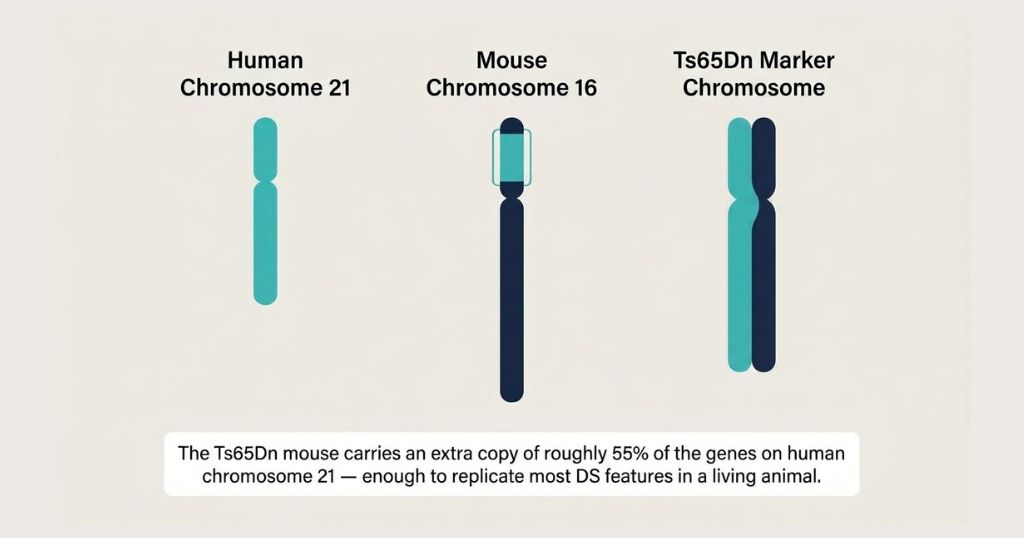
Mouse chromosome 16 (MMU-16) contains the region most homologous to human chromosome 21. [NIH/PMC] The Ts65Dn strain carries a supernumerary marker chromosome with roughly 13.4 Mb of distal chromosome 16 fused with a section of chromosome 17—giving the mouse trisomy for approximately 94 of the 170 human chromosome 21 gene counterparts (about 55%). [Alzforum]
The strain was created through X-ray irradiation in Dr. Muriel Davisson’s laboratory at The Jackson Laboratory, and was first described in 1990. It is available from The Jackson Lab as Stock #001924 and Stock #005252.
“The most widely used animal model for Down syndrome research”—described as such by multiple independent sources.
- Developmental delays in sensorimotor milestones; reduced birth weight; muscular trembling
- Deficits in spatial learning and memory; hippocampal-dependent memory impairments
- Progressive degeneration of basal forebrain cholinergic neurons from 6–12 months—the same marker associated with Alzheimer’s disease in people with DS
- Congenital heart defects and altered lung density
- Age-related increase in amyloid precursor protein (APP) levels—relevant because almost all people with DS develop Alzheimer’s pathology by their 40s
- Male sterility and distinctive facial features
Why not use full trisomy 16? Complete trisomy 16 mice do not survive past birth, and their trisomic segment includes genes from other human chromosomes beyond HSA21—making them a poor specific model. The Ts65Dn strain was designed specifically to get around this.
The Ts65Dn model is also used to study the Alzheimer’s disease that develops almost universally in people with Down syndrome.
Real Conditions, Wrong Label: Cats and Dogs
When a cat or dog goes viral as having “Down syndrome,” there is almost always a real medical condition behind it—just not that one. These are the diagnoses veterinarians actually use.
Domestic Cat — Cerebellar Hypoplasia & Related Conditions
Real condition present · (DS label incorrect)
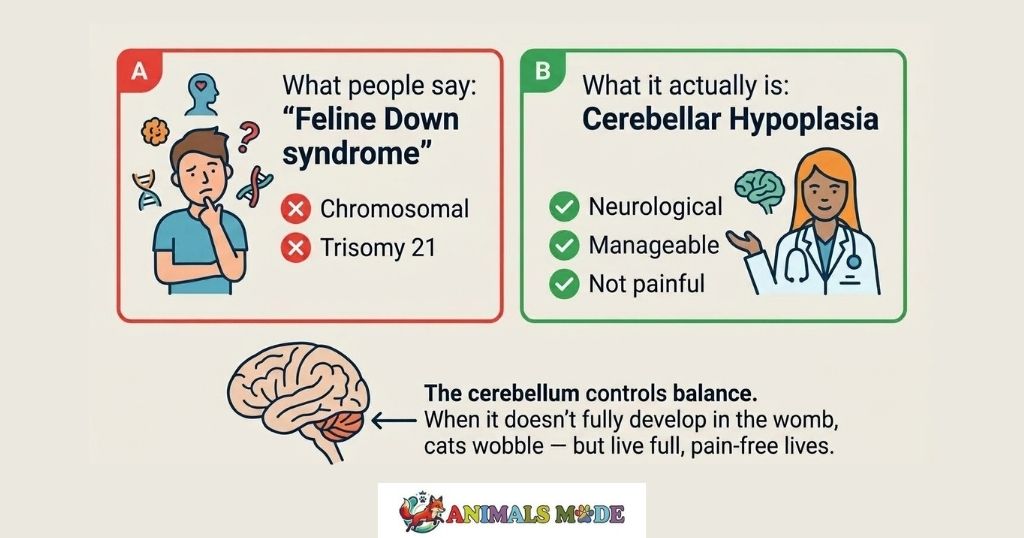
Cats have 19 pairs of chromosomes (38 total). They have no chromosome 21, which makes trisomy 21 chromosomally impossible. [Finding Dulcinea] Dr. Sarah Wooten, DVM, CVJ, confirms this directly. [briefly.co.za]
Condition 1: Cerebellar Hypoplasia (“Wobbly Cat Syndrome”)
This is the most common condition behind “DS cat” videos. The cerebellum—the part of the brain controlling balance, coordination, and fine motor skills—fails to fully develop while a kitten is still in the womb.
The primary cause is infection of an unvaccinated pregnant mother cat with feline panleukopenia virus (FPV, also called feline distemper or feline parvo), which passes to unborn kittens and interrupts cerebellar development. [PetMD] Symptoms—wobbling, tremors, and an unsteady gait—typically appear at 4–6 weeks of age when kittens first try to walk. [Cat Tales / The Columbian]
Key facts that reassure owners:
- The condition is not painful and does not worsen over time
- It is not contagious—affected cats cannot pass it to others
- Lifespan is normal for mild to moderate cases; cats learn to compensate
- Prevention is simple: vaccinating the mother with FVRCP before breeding [GoodRx Pet Health]
- Diagnosis is clinical; an MRI can confirm an underdeveloped cerebellum
Condition 2: Klinefelter-like Syndrome (XXY)
Male tortoiseshell cats carry an extra X chromosome (XXY rather than XY). This is a chromosomal abnormality—a genuine trisomy-type event in feline genetics—but it is completely different from Down syndrome.
Domestic Dog — Three Conditions That Get Mistaken for DS
Real conditions present · (DS label incorrect)
Dogs have 39 pairs of chromosomes (78 total)—more than double the human count. [Finding Dulcinea] Dr. Jennifer Coates, DVM, gives three reasons Down syndrome has never been diagnosed in dogs: chromosomal abnormalities of this type typically cause early death; the specific genetic testing has not been done in dogs; and the condition may genuinely not occur in dogs.
Condition 1: Congenital Hypothyroidism
Absent or low thyroid hormone at birth produces symptoms that closely mimic Down syndrome: slow growth, a large protruding tongue, short limbs, poor muscle tone, cognitive delay, and delayed opening of eyes and ears. PetMD describes it as “a good example” of a condition that is confused with DS in dogs.
Condition 2: Pituitary Dwarfism
When the pituitary gland does not produce adequate growth hormone, dogs stay small with a puppy-like appearance and retained puppy coat into adulthood.
German Shepherds are the breed most commonly affected; Saarloos Wolfdogs and Czech Wolfdogs are also predisposed. Signs typically appear between 2 and 6 months of age. Affected puppies often appear surprisingly thin and small compared to littermates, with a puppy coat that persists into adulthood instead of developing the normal adult fur. Without treatment, dogs with pituitary dwarfism rarely survive beyond 4–5 years. [JoiiPetCare]
Condition 3: Portosystemic Shunt
An abnormal blood vessel bypasses the liver so toxins are not filtered from the blood. This causes stunted growth, neurological signs, behavioural changes, and poor development. Congenital hydrocephalus and growth hormone deficiency can also produce overlapping presentations.
🐴 Horses: A Real Chromosome Condition, But Not Like DS
Horses (normal karyotype: 2n = 64) [Genetics Selection Evolution Journal] have documented chromosomal conditions—but none resembles Down syndrome. The most significant is equine Turner syndrome: a mare with only one X chromosome (karyotype 63, XO instead of 64, XX).
Described as the only complete horse monosomy that is compatible with survival, [AAEP / Eve Journal] affected mares are small, have poor conformation, inactive ovaries, no oestrous cycles, and are completely infertile—but their lifespan is otherwise normal.
A 1978 New Zealand study found that six of seven infertile mares sent to stud had the 63,XO karyotype, suggesting sex chromosome abnormalities may be “quite a common cause of sterility in the mare.” [SciQuest NZ]
Horses also show sex-reversal syndrome and autosomal translocations. None of these conditions involves trisomy or resembles Down syndrome clinically. [briefly.co.za]
XO mares can live normal lifespans but their small size and angular deformities often affect their movement — unlike the powerful, fluid stride that makes healthy horses natural galloping animals.
Viral Cases, Checked
These animals became famous online as having “Down syndrome.” In each case, the label is wrong—though a real story sits behind it.
Kenny the White Tiger (Label incorrect)
Cause: severe inbreeding — not a chromosomal disorder
Kenny is the most-cited example on the internet. He was a white tiger with a flattened face, wide-set eyes, and developmental issues. His appearance was caused by inbreeding depression, not trisomy. White tigers exist in captivity almost entirely because of decades of brother-sister and parent-offspring breeding to preserve the rare colour mutation.
The physical abnormalities that result—including Kenny’s features—are consequences of that inbreeding, not of any chromosomal condition analogous to Down syndrome. [Finding Dulcinea]
Otto the Kitten (Label incorrect)
Cause: genetic mutation or hormone deficiency
Otto was a kitten from Turkey who went viral for his wide-set eyes and flattened nose. His appearance was attributed to a genetic mutation or hormone deficiency—not trisomy of any kind. He does not meet any clinical standard for a chromosomal condition comparable to Down syndrome.
Bull Terriers (Label incorrect)
Cause: deliberate breed selection — not chromosomal
Bull terriers are frequently described as looking like they have Down syndrome because of their slanted eyes, physical frailty, and egg-shaped heads. These are breed traits produced by selective breeding over many generations—not chromosomal disorders. No bull terrier has ever been medically linked to any DS-equivalent condition.
What to Do If Your Pet Looks Like This
If your dog or cat has unusual features—wide-set eyes, an unusual gait, a protruding tongue, slow growth, or developmental delays—here is what veterinary guidance suggests:
- See a vet, not the internet.The conditions that actually cause DS-like presentations in pets (hypothyroidism, portosystemic shunts, cerebellar hypoplasia, pituitary dwarfism) are diagnosable. A vet can tell you what’s going on.
- Ask for a specific diagnosis.“Down syndrome” is not a veterinary diagnosis. Ask your vet to name the actual condition so you can understand prognosis and treatment options.
- For cats with wobbly movement: cerebellar hypoplasia is not painful, does not worsen, and is not contagious. Affected cats can live full lives with some environmental adjustments.
- For dogs with pituitary dwarfism: treatment exists and can significantly extend lifespan. Prognosis without treatment is poor—most affected dogs live only 4–5 years.
- Genetic testing is available but not routinely done in pets.If you want to know more about your pet’s specific genetics, a veterinary geneticist can advise on what testing is practical and what it can tell you.
Common Asked Questions About Animals Down Syndrome
Can cats have Down syndrome?
No. Cats have 19 pairs of chromosomes (38 total) and no chromosome 21, so trisomy 21 is chromosomally impossible in cats. Cats with unusual features are usually diagnosed with cerebellar hypoplasia or another specific neurological condition.
Why do some animals look like they have Down syndrome?
Different real conditions can produce features that look similar from the outside: wide-set eyes, poor muscle tone, unusual gait, slow development. In cats, cerebellar hypoplasia is a common cause. In dogs, congenital hypothyroidism or pituitary dwarfism are often to blame. In tigers like Kenny, the cause is inbreeding. Looking similar is not the same as having the same condition.
What happened to Kenny the “Down syndrome” tiger?
Kenny was a white tiger at Turpentine Creek Wildlife Refuge in Arkansas with an unusual appearance widely attributed to Down syndrome online. His features were actually caused by inbreeding depression—a well-documented consequence of the captive white tiger breeding programmes that rely heavily on closely related animals to preserve the colour mutation.
Can any animals have chromosomal disorders similar to Down syndrome?
Yes—chimpanzees can have trisomy 22, which is the closest known equivalent. It has been confirmed in only two animals ever, both documented in peer-reviewed research: a 1969 case that died before age two, and Kanako, who lived to 28 at Kyoto University’s Kumamoto Sanctuary.
Can dogs have mental disabilities?
Dogs can have conditions that affect cognition and development, such as congenital hypothyroidism, hydrocephalus, and portosystemic shunts—all of which can produce cognitive delays. These are real medical diagnoses with specific treatments and prognoses. “Mental disability” is not a veterinary term, but the underlying conditions it might describe are real and treatable.
Why do bull terriers look like they have Down syndrome?
Bull terriers have distinctive egg-shaped heads, slanted eyes, and sometimes fragile builds—all produced by deliberate selective breeding over many generations. These are breed traits, not chromosomal abnormalities. No bull terrier has been medically linked to any condition comparable to Down syndrome.
Are there whales, giraffes, or lions with Down syndrome?
No confirmed cases exist. These animals are mentioned on various websites, but not one peer-reviewed or veterinary source documents a specific chromosomal condition analogous to Down syndrome in any of them. Without verified cases, these claims do not meet our inclusion standard.
How common are genetic disorders in pets?
Chromosomal conditions are generally considered rare in pets, partly because severe abnormalities typically cause early death before diagnosis. However, sex chromosome abnormalities (like XXY male cats and 63,XO mares) may be more common than widely assumed. A 1978 New Zealand study found that six of seven infertile mares sent to stud had the 63,XO karyotype, suggesting chromosomal causes of infertility in horses may be underdiagnosed.

I’m Pedro, and I love learning about animals. I spend my time reading and researching how animals live, eat, move, and survive. I share simple, accurate facts to help everyone understand and enjoy the amazing world of wildlife.